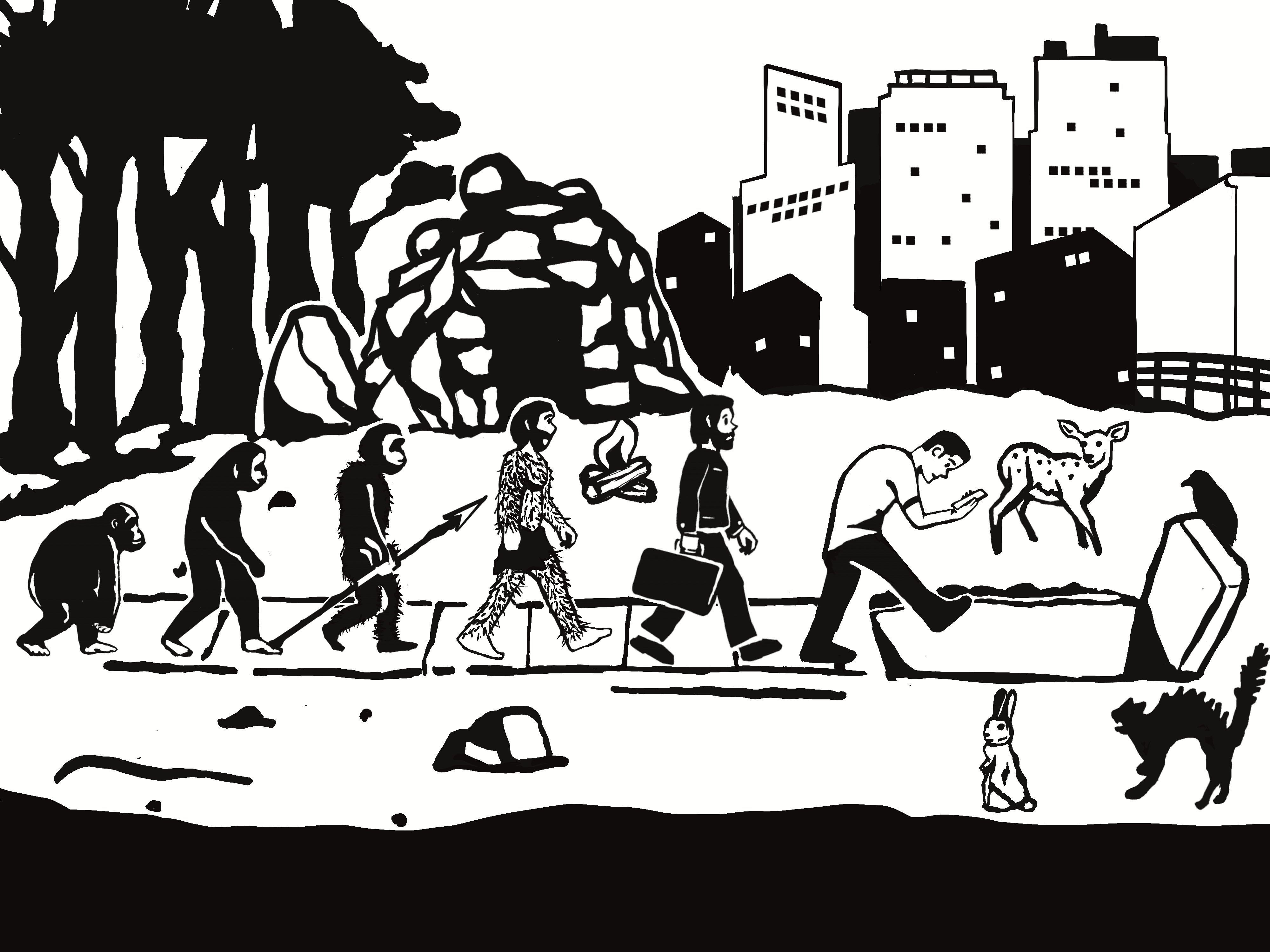
…harvesting ingredients from the back yard when preparing a meal

…harvesting ingredients from the back yard when preparing a meal
I’m writing for me because I enjoy the writing process.
I’m writing publicly in the hope that you can benefit.
Meatloaf.
A simple enough dish, right?
At least to any American mind, which likely imagined something like this:

It’s just a loaf of meat – how could that possibly be misconstrued?
Until you order a meatloaf in Europe and you get this:

The most important thing you can know is that you know nothing.
There’s always the possibility – regardless of your confidence level – that an alternative reality exists outside your personal little experience bubble.
It may be worth a peek outside that bubble every once in a while to test some of your assumptions – in particular the ones in which you have the highest confidence.
Some instances are harmless.
This “new” form of meatloaf that I accidentally discovered a few years ago was actually pretty tasty, but even if the outcome had been different, no major harm done. A few swigs of beer to cleanse the palette and a couple euros to pay for the meal, and it would have all been forgotten.
Other examples have greater impact.
The appearance of the first Model T didn’t immediately kill the horse and buggy.
The light bulb didn’t render candles obsolete overnight.
Technological transitions are not step functions. There is no sudden change, no instantaneous jump to a new, higher value of technology. Instead there is a gradual transition that eventually results in a full switch from the previous technology to the next. The slope is not smooth either – there are plenty of bumps along the way.
Sometimes that full switch takes years. Even decades.
We are in a period of significant transition across all of our technologies.
Don’t write off the newcomers. Don’t force them either.
They will find their own way in time. Be patient.
AI makes mistakes. I’ve seen it. You probably have as well.
But it’s doing exactly what it should at this stage. As early AI adopters, we share the pain of the initial owners of the first Model T –
How did all the creature comforts and enhancements come about to give us the automobiles of today that we know and love?
Feedback.
Users reported their experience and updates followed.
And while it took years for some of these automotive enhancements to come to fruition (e.g., electric starter), technological updates of today happen in weeks or months.
And while a select, elite few had the privilege of “beta testing” the Model T, we all get a shot at molding this new technology we call AI.
We all have the opportunity to leave our unique imprint on the future of AI – so when any platform makes a mistake, don’t complain.
Be patient.
Teach it something.
It’s learning.
It took nearly a year and a half for a paper towel dispenser to be replaced in my office.
Because it was too expensive? Not likely – I’d guess under $100.
Because it was too complex and needed that amount of time? Nope – that type of task should conservatively take about 4 hours of actual work to complete.
Complex tasks need that amount of time to be completed.
Simple tasks – like this dispenser – are sidelined to focus on the complex, “more meaningful” tasks. Simple tasks could (and should) just be handled when they are identified, but they are delayed by complex project management processes.
Simple tasks are bogged down by process.
But without process, complex tasks inevitably fail.
What’s the solution?
I suppose this is a milestone 🙂
I should have been here much sooner, as my goal at one point was to post daily – from the looks of it, a 2021 new year’s resolution gone awry.
But life has a way of distracting us sometimes.
So as I reflect back on 5 years of sharing my thoughts with the virtual world, I can only hope that I have made even a marginal impact on at least one real person.
And if I haven’t, I am thankful for my own growth on this writing journey, learning how to say more with less.
How to clearly convey a message without overwhelming an audience to my stream of thought.
How to break through the fear of exposing these abstract thoughts of mine to reality.
How to avoid altering my thoughts to fit an audience.
And now, onward to 1,000 posts!
Life was difficult “back then” – those that preceded my generation went through hell, and I commend them on their journey. Their feelings are valid.
But my empathy ends when, on their ascension to power, they adopt the very practices they claim to hate.
The ones who subjected them to those detrimental practices are long retired – or in some cases, probably dead now – this new cohort can choose one of two paths for leading the next generation:
The former approach saddens me. Irate with their previous leadership, and either unable or unwilling to address it with them, this new regime passes the negative energy downhill as a way to feel better.
The “I had to do it, so do you” mentality.
But there’s no more admirable act than the latter path – to suffer through adversity on the ascent, but then choose a better path when given the power to similarly subject others to the same fate.
A path toward progress.
Society collectively obsesses over continuous process improvement, but what about continuous people improvement?
We constantly improve everything in the workplace except the human condition.
Make the right call.
Be better.
Do better.
We feel your pain for what you went through – honestly – but take the bold leap to improve the human condition.
If you choose not to, then that’s a shame – but we will patiently await our turn to do the right thing.
In today’s data-driven world, let’s just be honest…
…this call will be recorded.
I start my day in the shower using soap from the United States, eventually drying myself off with a towel from Turkey or Pakistan, and then I shave using shaving cream from Canada.
I dress myself with clothes from Vietnam, Malaysia, or Bangladesh (all of which were washed in a washer and dryer from the United States), before heading to work in my vehicle made in Japan.
Before departing I grab my headphones and cell phone that were made in Vietnam, both of which were charging through an electrical outlet made in China that is connected to Romex wiring in my walls made in the United States. That wiring attaches to an electrical panel from either the United States, Mexico, or China.
I bring a lunch to work each day. In my kitchen I find limes and asparagus from Mexico, kiwi from Italy, chia seeds from Paraguay, Ramen from China, potatoes from Canada, quinoa from Peru, and bananas from Guatemala, all of which are stored in appliances and cabinets from the United States.
I use my cutting knives from India to prepare my meals, which I cook on cookware from the United States when I’m using the stovetop, or on a baking sheet from China (with a silicon baking sheet from France) in the oven. If I’m packing for work I’ll store my food in Tupperware from the United States that goes into a lunch bag made in Vietnam, but if I’m eating at home I’ll use plates from Indonesia and bowls from China.
Hey, look, I also found a bottle of water from Fiji hiding in the back of the pantry (more on the absurdity of this particular product in a future post).
What else can we find?
My workshop has drills from Japan, nails from India, nail guns from the United States, and a chainsaw from Germany.
I write draft posts on a legal pad made in India (or in a notebook from the Philippines), with a pen from Tunisia, before typing those words on a keyboard made in China connected to a computer made in Vietnam. I typically store my computer, legal pad, notebook, and pens in one of a few bags I own that were made in the Philippines.
For those who lost track, that is 21 unique countries spanning 6 continents.
I can connect with someone across the planet in less time than it takes me to walk next door to say hello to my neighbor.
The oxygen that my lungs are absorbing in this very moment – molecules are physical things, after all – came from air that ignores the arbitrary lines we draw on our fancy maps. It came from somewhere on this planet, but that’s slightly harder to pinpoint.
We are one world.
Earth must come first.
The transition will be rough – but inevitable.
Get on board.
Imagine a world where we all stopped buying non-essentials for three months.
What power the masses could wield with such discipline. But that would be difficult.
The better move is gradual – over the next six to eight months, train yourself by heavily scrutinizing your spending, and slowly remove unnecessary purchases from your life.
Spending 10% less 8 months from now during the upcoming holiday season would be a win.
Then repeat next year.
Unlimited energy is appealing in theory – but we’re laughably irresponsible with the finite energy we have now.
Imagine how wasteful we’d be with [virtually] no limits.
Think about how you are with a new tube of toothpaste, or a new shampoo bottle. How about at the buffet?
It isn’t until we reach the last drop that we start behaving in the conservative ways we should have been from start.
Reading Between the Edicts – Executive Orders and Presidential Memoranda issued in the past 100 years that have targeted specific law firms by name.
Did I miss one? It’s possible – I’m human 🙂 Post any omissions in the comments with a link and I’ll add it.
Reading Between the Edicts – this Executive Order focuses on Federal Rule of Civil Procedure 65(c). I encourage you to read this order in its entirety in addition to reading the excerpts below.
2025-03-11 — Executive Order – Ensuring Enforcement of Federal Rule of Civil Procedure 65(c)
One key mechanism is Federal Rule of Civil Procedure 65(c) (Rule 65(c)), which mandates that a party seeking a preliminary injunction or temporary restraining order (injunction) provide security in an amount that the court considers proper to cover potential costs and damages to the enjoined or restrained party if the injunction is wrongly issued.
Consistent enforcement of this rule is critical to ensuring that taxpayers do not foot the bill for costs or damages caused by wrongly issued preliminary relief by activist judges and to achieving the effective administration of justice.
Therefore, it is the policy of the United States to demand that parties seeking injunctions against the Federal Government must cover the costs and damages incurred if the Government is ultimately found to have been wrongfully enjoined or restrained. Federal courts should hold litigants accountable for their misrepresentations and ill-granted injunctions.
Consistent with applicable law, the heads of executive departments and agencies (agencies), in consultation with the Attorney General, are directed to ensure that their respective agencies properly request under Rule 65(c) that Federal district courts require plaintiffs to post security equal to the Federal Government’s potential costs and damages from a wrongly issued injunction. The scope of this directive covers all lawsuits filed against the Federal Government seeking an injunction where agencies can show expected monetary damages or costs from the requested preliminary relief, unless extraordinary circumstances justify an exception.
(b) the security amount the agency is requesting is based on a reasoned assessment of the potential harm to the enjoined or restrained party; and
(c) failure of the party that moved for preliminary relief to comply with Rule 65(c) results in denial or dissolution of the requested injunctive relief.
Reading Between the Edicts – let’s look at another Executive Order related to hiring. I encourage you to read the order in its entirety in addition to reading the excerpts below.
2025-01-20 — Executive Order – Reforming the Federal Hiring Process and Restoring Merit to Government Service
prioritize recruitment of individuals committed to improving the efficiency of the Federal government, passionate about the ideals of our American republic, and committed to upholding the rule of law and the United States Constitution
…prevent the hiring of individuals who are unwilling to defend the Constitution or to faithfully serve the Executive Branch
This Federal Hiring Plan shall include specific agency plans to improve the allocation of Senior Executive Service positions in the Cabinet agencies, the Environmental Protection Agency, the Office of Management and Budget, the Small Business Administration, the Social Security Administration, the National Science Foundation, the Office of Personnel Management, and the General Services Administration, to best facilitate democratic leadership, as required by law, within each agency.
Next up for Reading Between the Edicts is an Executive Order and related OPM memos affecting the Executive Branch’s Senior Executive Service (SES). I encourage you to read all sources in their entirety in addition to reading the excerpts below.
2025-01-20 — Executive Order – Restoring Accountability for Career Senior Executives
Because SES officials wield significant governmental authority, they must serve at the pleasure of the President.
2025-02-25 — OPM Policy – Basic Appraisal System
Old Critical Elements for Senior Executive Service Performance:
1. Leading Change
2. Leading People
3. Business Acumen
4. Building Coalitions
5. Results Driven
2025-02-25 — OPM Memo – New Senior Executive Service Performance Appraisal System and Performance Plan…
New Critical Elements for Senior Executive Service Performance:
1. Faithful Administration of the Law and the President’s Policies
2. Government Efficiency
3. Merit and Competence
4. Holding Others Accountable and Treating Them Fairly
5. Achieving Organizational Goals
Faithful Administration of the Law and the President’s Policies. This is the most critical element for reviewing the job performance of someone who serves under the elected President. All senior executives must clearly and demonstrably execute congressionally-authorized tasks pursuant to the leadership and executive authority of the President. Faithful administration of one’s role in the Executive Branch requires commitment to the principles of the Founding, including equality under the law and democratic self-government. Senior executives must demonstrate specific results that align with and advance the President’s specific policy agenda.
For agencies with five or more executives, no more than 30% of total ratings shall be Level 4 or Level 5, unless the President waives this provision by certifying that the performance of the agency’s executives was outstanding during the relevant time period*
*This requirement will only become effective after OPM has completed rulemaking to revise 5 C.F.R. § 430.305(a)(5). Until that rulemaking is completed, agencies should treat the 30% cap on Levels 4 and 5 as general guidance for ensuring “performance evaluation results that make meaningful distinctions based on relative performance,” 5 C.F.R. § 430.405(b)(1)(iii), and not a hard-and-fast rule or requirement.
Our refusal to fight the demons within results in us projecting those demons onto others, and thus the war is externalized. That’s a war we’re willing to fight – no admission of fault if we’re fighting someone out there.
Ignore what’s happening internally and you’re bound to pick an unjustified fight with others who have done nothing.
New series here. No opinions. No commentary from me. Just quotes from recently released directives that caught my attention. Maybe they’ll trigger something in your mind too.
First up is an Executive Order related to Independent Regulatory Agencies. I encourage you to read the order in its entirety in addition to reading the excerpts below.
2025-02-18 — Executive Order – Ensuring Accountability for All Agencies
“Agency,” unless otherwise indicated, means any authority of the United States that is an “agency” under 44 U.S.C. 3502(1), and shall also include the Federal Election Commission.
The Director of OMB shall establish performance standards and management objectives for independent agency heads, as appropriate and consistent with applicable law, and report periodically to the President on their performance and efficiency in attaining such standards and objectives.
No employee of the executive branch acting in their official capacity may advance an interpretation of the law as the position of the United States that contravenes the President or the Attorney General’s opinion on a matter of law,…
For the Federal Government to be truly accountable to the American people, officials who wield vast executive power must be supervised and controlled by the people’s elected President.
The heads of independent regulatory agencies shall establish a position of White House Liaison in their respective agencies.
Human innovation isn’t as impressive as it seems.
Humanity’s collective intelligence is an intellectual powerhouse – our ingenuity is endless, and nothing is out of reach. There is nothing we can’t do, thus rendering our inventions quite predictable.
Time alone stands as the sole roadblock impeding further advancement.
And with this sole obstacle in our crosshairs, we overzealously inject increased effort into our routines as a means to compress the timeline, exponentially inflating our advancement rate. We are perpetually innovating, improving, and growing – a path and pace strongly reinforced and encouraged by the systems that surround us.
Instead of balancing time and effort, we supercharge effort to reduce time.
What’s the rush, though?
One plausible explanation – humanity’s undeniable, intrinsic desire to be first. Just watch kids at day care rush to be first in line when it’s time to go back into the classroom, pushing and shoving to claim that top spot. We carry this behavior right into adulthood –
Beat the competition.
Get there first.
Show your opponents no mercy.
The confounding part is that everything ‘discoverable’ will always be out there, just waiting to be found. We’re smart enough. We’ll get to it all eventually. But on an individual level –
We are impatient. We want it now.
We are paranoid. If we don’t do it, someone else will before we can.
We are conceited. No one else could possibly do what we alone can do, so better get to it before we are gone and the world is deprived of our individual greatness.
We push ourselves to the limit – to near robotic-level productivity – convinced that with our extra effort we can solve the world’s problems “with our own bare hands.” That’s another way of saying we can do it all ourselves.
But we can’t.
We shouldn’t.
And that’s okay.
If we are in such a rush to discover all the things on our own – to singlehandedly solve every global problem – we are not champions of our species, endowed with incredible powers that will save us all.
We are impatient.
We are paranoid.
We are conceited.
These messianic thoughts of ourselves that we entertain – that we’ve been unleashed on this world by the universe for the betterment of the human race – are laughable. Toss that grandiose narcissism aside. Escape that individual ego-bubble, join the rest of us in reality, slow down, and contribute collaboratively. We’re a global community. Save some ‘discovery’ for the rest of humanity.
And not just for the present population.
Time is not so much a roadblock as it is another resource for our species to utilize as we grow our collective intellect.
There will be others after us to carry the baton – in theory, anyway.
Notwithstanding a catastrophic human self-extinction brought on by our current state of affairs, we should all throttle back and rest easy knowing future generations will pick up where we left off.
Recent events sparked some new thoughts on a concept I introduced in a previous post.
Pay attention to the rules before engaging in the game. Intimately understand the system and identify the levers that achieve maximum impact.
I did not participate in the 28 February economic blackout:
*We’ll ignore for now the rare instance where a blackout day falls on the last day of a fiscal quarter.
If financial impact was the goal, a barrage of wooden arrows just shattered against tank armor.
If the goal is to stand in solidarity with a specific community or cause – great.
Unify.
Drive change.
I support the intent – just recognize the false lever and re-evaluate the strategy.
So no, I did not participate in the Feb 28 economic blackout:
I did shop at local stores though – because I typically do anyway.
I still used my credit card sparingly – I always do anyway.
These two actions form the core of the normal spending habits I established over the past decade.
Looking to make an impact? I emphasized “normal spending habits” twice in this post for a reason. Incrementally alter daily habits, fiercely and resolutely guard that checking account, and allow the desired global impacts to become a side-effect of individual self-improvement.
Snowbirds – people that move from north to south in the winter – are modern day nomads, migrating to the warmer weather.
For some reason we wait until retirement to do it now…
Full tank of gas? It’s NASCAR, baby! Let’s go!
Running on empty? Drive it like Grandpa stole it.
New tube of Toothpaste? gimmie all the mint!
End of the tube? squeeze it, roll it, press it until you get that last little bit, and that’s good enough to brush with.
Same with shampoo. Or soap. Or anything else in a tube or bottle or container.
We don’t realize how little we truly need until the stockpile is nearing depletion.
In most cases we can’t truly know what remains. Any idea how many fish are left in the ocean? I certainly don’t. Yet our default is to the abundance mindset, believing the cache is bountiful, when in most cases it isn’t.
You require much less than you realize. Pay attention. Use less.