Ma! – The Meatloaf!

Meatloaf.

A simple enough dish, right?

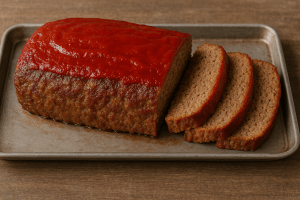
At least to any American mind, which likely imagined something like this:

It’s just a loaf of meat – how could that possibly be misconstrued?


Until you order a meatloaf in Europe and you get this:


The most important thing you can know is that you know nothing.

There’s always the possibility – regardless of your confidence level – that an alternative reality exists outside your personal little experience bubble.

It may be worth a peek outside that bubble every once in a while to test some of your assumptions – in particular the ones in which you have the highest confidence.

Some instances are harmless.

This “new” form of meatloaf that I accidentally discovered a few years ago was actually pretty tasty, but even if the outcome had been different, no major harm done. A few swigs of beer to cleanse the palette and a couple euros to pay for the meal, and it would have all been forgotten.

Other examples have greater impact.

Transitions take time

The appearance of the first Model T didn’t immediately kill the horse and buggy.

The light bulb didn’t render candles obsolete overnight.

Technological transitions are not step functions. There is no sudden change, no instantaneous jump to a new, higher value of technology. Instead there is a gradual transition that eventually results in a full switch from the previous technology to the next. The slope is not smooth either – there are plenty of bumps along the way.

Sometimes that full switch takes years. Even decades.

We are in a period of significant transition across all of our technologies.

Don’t write off the newcomers. Don’t force them either.

They will find their own way in time. Be patient.

Today’s [AI] mistakes frame AI’s future

AI makes mistakes. I’ve seen it. You probably have as well.

But it’s doing exactly what it should at this stage. As early AI adopters, we share the pain of the initial owners of the first Model T –

  • We are the ones with sore arms from endlessly hand-cranking our engine since there was no electric starter yet
  • We are the ones complaining about the bumpy ride since suspensions weren’t what they are today
  • We are the ones fed up with driving in the rain, and eating bugs as we drove because there was no windshield yet

How did all the creature comforts and enhancements come about to give us the automobiles of today that we know and love?

Feedback.

Users reported their experience and updates followed.

And while it took years for some of these automotive enhancements to come to fruition (e.g., electric starter), technological updates of today happen in weeks or months.

And while a select, elite few had the privilege of “beta testing” the Model T, we all get a shot at molding this new technology we call AI.

We all have the opportunity to leave our unique imprint on the future of AI – so when any platform makes a mistake, don’t complain.

Be patient.

Teach it something.

It’s learning.

Earth First

I start my day in the shower using soap from the United States, eventually drying myself off with a towel from Turkey or Pakistan, and then I shave using shaving cream from Canada.

I dress myself with clothes from Vietnam, Malaysia, or Bangladesh (all of which were washed in a washer and dryer from the United States), before heading to work in my vehicle made in Japan.

Before departing I grab my headphones and cell phone that were made in Vietnam, both of which were charging through an electrical outlet made in China that is connected to Romex wiring in my walls made in the United States. That wiring attaches to an electrical panel from either the United States, Mexico, or China.

I bring a lunch to work each day. In my kitchen I find limes and asparagus from Mexico, kiwi from Italy, chia seeds from Paraguay, Ramen from China, potatoes from Canada, quinoa from Peru, and bananas from Guatemala, all of which are stored in appliances and cabinets from the United States.

I use my cutting knives from India to prepare my meals, which I cook on cookware from the United States when I’m using the stovetop, or on a baking sheet from China (with a silicon baking sheet from France) in the oven. If I’m packing for work I’ll store my food in Tupperware from the United States that goes into a lunch bag made in Vietnam, but if I’m eating at home I’ll use plates from Indonesia and bowls from China.

Hey, look, I also found a bottle of water from Fiji hiding in the back of the pantry (more on the absurdity of this particular product in a future post).

What else can we find?

My workshop has drills from Japan, nails from India, nail guns from the United States, and a chainsaw from Germany.

I write draft posts on a legal pad made in India (or in a notebook from the Philippines), with a pen from Tunisia, before typing those words on a keyboard made in China connected to a computer made in Vietnam. I typically store my computer, legal pad, notebook, and pens in one of a few bags I own that were made in the Philippines.

For those who lost track, that is 21 unique countries spanning 6 continents.

I can connect with someone across the planet in less time than it takes me to walk next door to say hello to my neighbor.

The oxygen that my lungs are absorbing in this very moment – molecules are physical things, after all – came from air that ignores the arbitrary lines we draw on our fancy maps. It came from somewhere on this planet, but that’s slightly harder to pinpoint.

We are one world.

Earth must come first.

The transition will be rough – but inevitable.

Get on board.

We don’t deserve fusion

Unlimited energy is appealing in theory – but we’re laughably irresponsible with the finite energy we have now.

Imagine how wasteful we’d be with [virtually] no limits.

Think about how you are with a new tube of toothpaste, or a new shampoo bottle. How about at the buffet?

It isn’t until we reach the last drop that we start behaving in the conservative ways we should have been from start.

Reading between the Edicts – Independent Agencies


New series here. No opinions. No commentary from me. Just quotes from recently released directives that caught my attention. Maybe they’ll trigger something in your mind too.

First up is an Executive Order related to Independent Regulatory Agencies. I encourage you to read the order in its entirety in addition to reading the excerpts below.


2025-02-18 — Executive Order – Ensuring Accountability for All Agencies


“Agency,” unless otherwise indicated, means any authority of the United States that is an “agency” under 44 U.S.C. 3502(1), and shall also include the Federal Election Commission.


The Director of OMB shall establish performance standards and management objectives for independent agency heads, as appropriate and consistent with applicable law, and report periodically to the President on their performance and efficiency in attaining such standards and objectives.


No employee of the executive branch acting in their official capacity may advance an interpretation of the law as the position of the United States that contravenes the President or the Attorney General’s opinion on a matter of law,…


For the Federal Government to be truly accountable to the American people, officials who wield vast executive power must be supervised and controlled by the people’s elected President.


The heads of independent regulatory agencies shall establish a position of White House Liaison in their respective agencies. 

Win some, leave some

Human innovation isn’t as impressive as it seems.

Humanity’s collective intelligence is an intellectual powerhouse – our ingenuity is endless, and nothing is out of reach. There is nothing we can’t do, thus rendering our inventions quite predictable.

Time alone stands as the sole roadblock impeding further advancement.

And with this sole obstacle in our crosshairs, we overzealously inject increased effort into our routines as a means to compress the timeline, exponentially inflating our advancement rate. We are perpetually innovating, improving, and growing – a path and pace strongly reinforced and encouraged by the systems that surround us.

Instead of balancing time and effort, we supercharge effort to reduce time.

What’s the rush, though?

One plausible explanation – humanity’s undeniable, intrinsic desire to be first. Just watch kids at day care rush to be first in line when it’s time to go back into the classroom, pushing and shoving to claim that top spot. We carry this behavior right into adulthood –

Beat the competition.

Get there first.

Show your opponents no mercy.

The confounding part is that everything ‘discoverable’ will always be out there, just waiting to be found. We’re smart enough. We’ll get to it all eventually. But on an individual level –

We are impatient. We want it now.

We are paranoid. If we don’t do it, someone else will before we can.

We are conceited. No one else could possibly do what we alone can do, so better get to it before we are gone and the world is deprived of our individual greatness.

We push ourselves to the limit – to near robotic-level productivity – convinced that with our extra effort we can solve the world’s problems “with our own bare hands.” That’s another way of saying we can do it all ourselves.

But we can’t.

We shouldn’t.

And that’s okay.

If we are in such a rush to discover all the things on our own – to singlehandedly solve every global problem – we are not champions of our species, endowed with incredible powers that will save us all.

We are impatient.

We are paranoid.

We are conceited.

These messianic thoughts of ourselves that we entertain – that we’ve been unleashed on this world by the universe for the betterment of the human race – are laughable. Toss that grandiose narcissism aside. Escape that individual ego-bubble, join the rest of us in reality, slow down, and contribute collaboratively. We’re a global community. Save some ‘discovery’ for the rest of humanity.

And not just for the present population.

Time is not so much a roadblock as it is another resource for our species to utilize as we grow our collective intellect.

There will be others after us to carry the baton – in theory, anyway.

Notwithstanding a catastrophic human self-extinction brought on by our current state of affairs, we should all throttle back and rest easy knowing future generations will pick up where we left off.

Don’t bring checkers to a chess match

Recent events sparked some new thoughts on a concept I introduced in a previous post.

Pay attention to the rules before engaging in the game. Intimately understand the system and identify the levers that achieve maximum impact.

I did not participate in the 28 February economic blackout:

  • It’s the wrong tool for the intended impact. Halting spending for one day seems significant to the average person, but it’s a rounding error – a mere blip – on the Income Statements of the targeted large-cap, multinational companies currently in the crosshairs. These companies measure their finances quarterly, in lockstep with financial markets – they easily absorb a single-day financial hit.
  • Going cold turkey never works anyway. Keeping the first bullet in mind, companies won’t even see the impact of a one-day sales drop if individuals switch back to regularly scheduled “spending” programs and merely shift planned blackout day purchases to the next day*. Abruptly halting all spending on a single day is not sustainable for the average consumer anyway, and the inevitable return to normal spending habits becomes a non-impact since those sales still appear on the same quarterly financial statement.

*We’ll ignore for now the rare instance where a blackout day falls on the last day of a fiscal quarter.

If financial impact was the goal, a barrage of wooden arrows just shattered against tank armor.

If the goal is to stand in solidarity with a specific community or cause – great.

Unify.

Drive change.

I support the intent – just recognize the false lever and re-evaluate the strategy.


So no, I did not participate in the Feb 28 economic blackout:

I did shop at local stores though – because I typically do anyway.

I still used my credit card sparingly – I always do anyway.

These two actions form the core of the normal spending habits I established over the past decade.

Looking to make an impact? I emphasized “normal spending habits” twice in this post for a reason. Incrementally alter daily habits, fiercely and resolutely guard that checking account, and allow the desired global impacts to become a side-effect of individual self-improvement.

The Abundance Illusion

Full tank of gas? It’s NASCAR, baby! Let’s go!

Running on empty? Drive it like Grandpa stole it.


New tube of Toothpaste? gimmie all the mint!

End of the tube? squeeze it, roll it, press it until you get that last little bit, and that’s good enough to brush with.

Same with shampoo. Or soap. Or anything else in a tube or bottle or container.


We don’t realize how little we truly need until the stockpile is nearing depletion.

In most cases we can’t truly know what remains. Any idea how many fish are left in the ocean? I certainly don’t. Yet our default is to the abundance mindset, believing the cache is bountiful, when in most cases it isn’t.

 You require much less than you realize. Pay attention. Use less.