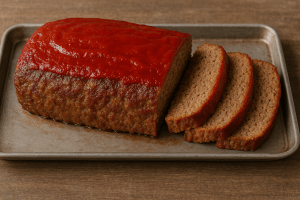
Ma! – The Meatloaf!

Meatloaf.

A simple enough dish, right?

At least to any American mind, which likely imagined something like this:

It’s just a loaf of meat – how could that possibly be misconstrued?


Until you order a meatloaf in Europe and you get this:


The most important thing you can know is that you know nothing.

There’s always the possibility – regardless of your confidence level – that an alternative reality exists outside your personal little experience bubble.

It may be worth a peek outside that bubble every once in a while to test some of your assumptions – in particular the ones in which you have the highest confidence.

Some instances are harmless.

This “new” form of meatloaf that I accidentally discovered a few years ago was actually pretty tasty, but even if the outcome had been different, no major harm done. A few swigs of beer to cleanse the palette and a couple euros to pay for the meal, and it would have all been forgotten.

Other examples have greater impact.

Earth First

I start my day in the shower using soap from the United States, eventually drying myself off with a towel from Turkey or Pakistan, and then I shave using shaving cream from Canada.

I dress myself with clothes from Vietnam, Malaysia, or Bangladesh (all of which were washed in a washer and dryer from the United States), before heading to work in my vehicle made in Japan.

Before departing I grab my headphones and cell phone that were made in Vietnam, both of which were charging through an electrical outlet made in China that is connected to Romex wiring in my walls made in the United States. That wiring attaches to an electrical panel from either the United States, Mexico, or China.

I bring a lunch to work each day. In my kitchen I find limes and asparagus from Mexico, kiwi from Italy, chia seeds from Paraguay, Ramen from China, potatoes from Canada, quinoa from Peru, and bananas from Guatemala, all of which are stored in appliances and cabinets from the United States.

I use my cutting knives from India to prepare my meals, which I cook on cookware from the United States when I’m using the stovetop, or on a baking sheet from China (with a silicon baking sheet from France) in the oven. If I’m packing for work I’ll store my food in Tupperware from the United States that goes into a lunch bag made in Vietnam, but if I’m eating at home I’ll use plates from Indonesia and bowls from China.

Hey, look, I also found a bottle of water from Fiji hiding in the back of the pantry (more on the absurdity of this particular product in a future post).

What else can we find?

My workshop has drills from Japan, nails from India, nail guns from the United States, and a chainsaw from Germany.

I write draft posts on a legal pad made in India (or in a notebook from the Philippines), with a pen from Tunisia, before typing those words on a keyboard made in China connected to a computer made in Vietnam. I typically store my computer, legal pad, notebook, and pens in one of a few bags I own that were made in the Philippines.

For those who lost track, that is 21 unique countries spanning 6 continents.

I can connect with someone across the planet in less time than it takes me to walk next door to say hello to my neighbor.

The oxygen that my lungs are absorbing in this very moment – molecules are physical things, after all – came from air that ignores the arbitrary lines we draw on our fancy maps. It came from somewhere on this planet, but that’s slightly harder to pinpoint.

We are one world.

Earth must come first.

The transition will be rough – but inevitable.

Get on board.

The earth no longer provides for us…

…at least not willingly.

Let us imagine a world where you can step outside your door and grab something nourishing to eat, at no cost to you, directly from nature. As an experiment, venture outdoors and see what you can find.

Chances are, you won’t find anything.

A home garden doesn’t count in this scenario. Gardens require considerable human input to generate food. We must coax the nutrients from the earth to sustain ourselves, because the earth is stubborn when it comes to growing what humans eat. I’m challenging you to find an unprocessed food source that occurs naturally in the wild that we can simply eat. I’m willing to bet that – excluding gardens and farms – you’d walk miles and still be unable to find a source that can sustain you. Hunters may have better luck, but what about the rest of us?

We’ve been relying on agriculture to sustain us for thousands and thousands of years, so I’m not necessarily surprised by the results of this experiment. What is concerning, however, is that over the course of those thousands of years, we’ve clearly been forgotten by the earth. We decided our way was better, and she has shifted her attention elsewhere to provide for other species.

If there were ever a long-term warning sign – relatively speaking – that our time has come, that our reign as apex species is over, this is it. The fact that this earth no longer naturally provides – in abundance – that which we need to sustain ourselves.

Grow more. Fence less.

As another growing season comes to a close, I lament the loss of the vegetable plants consumed by the animals with whom I share a yard. Carrots, kale, spinach, and lettuce, all wiped out in a matter of days early on in the season, unable to regenerate because animals typically consume the entire plant.

Consequently, I’ve identified a new strategy for next year: grow more.

I reject the notion that I must create secure, impenetrable garden beds for the food I eat while leaving the majority of my open space meticulously manicured (and useless).

Animals are hungry, just like us, and given the lack of groundhog grocery stores in the immediate area, I can take the hit, devote a larger percentage of my yard to growing more, and give back to my roommates.

Who calls the shots with your food?

Beat your taste buds, fuel your body properly

Your tongue is very adept at tricking your brain into telling you what it thinks you should be eating, and certain food products are designed to take advantage of this internal circuitry.

Your tongue can provide its opinion on your food intake – I certainly don’t voluntarily eat poor-tasting food – but it shouldn’t make the final call.

Craving something specific to eat right now? That’s fine, just investigate the source of this impulse first before indulging.

Why do you eat?

Why do you eat? “Because I’m hungry” is an insufficient response. Think deeper and truly grasp the meaning of hunger.

Why do you eat what you eat? My answer to this question was always: “That’s what I grew up eating.” This response sounds eerily similar to the dangerous phrase: “We’ve always done it this way.”

Ask questions.

Challenge the status quo.

Maybe there’s a better way.

A trip down under

I went on a crocodile tour on the Adelaide river in Australia a few years ago.

Our guide was a true local. Judging by the calluses on his feet, he never wore a pair of shoes in his life.

He had a few interesting insights:


Humans are really fuel inefficient

We’ll consume substantial calories in preparation for a 10K race, and then eat again immediately afterwards to replenish what we burned off.

Meanwhile a 1-ton croc could survive on a few chickens for 6-8 weeks.


Only the strong survive

He explained how the crocs we see before us are the result of millions of years of evolution weeding out the weak. The crocs before us were the true 1% of their species. A single male croc every few kilometers of riverbank. Only the very top of the pyramid survives.


Care to feel weak? Put yourself one meter away from a crocodile with only a thin metal grate in between.

Alright, I just finished my workout. Time for a protein shake.

What was I thinking? – Baking

I put a cake in the oven last week and immediately decided to put the oven mitts away. No big deal, except that instead of opening the drawer next to the stove where they belong, I opened the oven instead and tried to put them there.

Fortunately, the cake finished baking without issue and it came time to turn the stove timer off.

For this task I decided to open the microwave.

What was I thinking?

Plant a seed. Watch it grow.

A few years I started a vegetable garden. I started with a single small pot first – a trial run since I wasn’t quite convinced I could keep plants alive. I passed that test, and this past growing season was quite rewarding. You should try it sometime. Here’s why:

  1. It’s therapeutic.
  2. The growing process is astonishing. Put a few seeds into fertile soil. Water. Harvest. Voila. Nutritious food arises from the ground, growing from seeds the size of a nail head. Great things sprouting from what seems like nothing.
  3. Nothing compares to fresh vegetables. Not store bought fresh – right off the plant fresh.

Plant a seed and watch it grow. You’ll grow as well.